The Myth of a Winning Streak’s Momentum
The winning streak myth makes chance feel directional. Learn how to separate a run of outcomes from the next independent event and keep your choices clear.

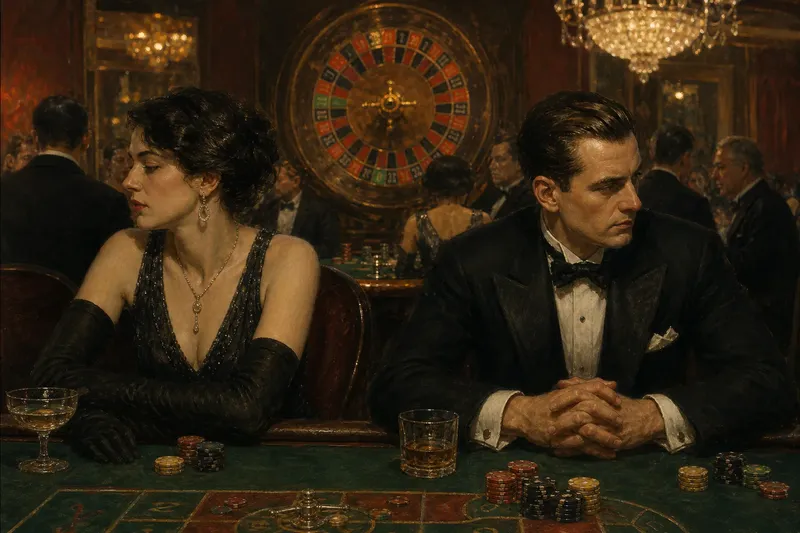
At a casino table in Biên Hòa, a player watches the same colour appear several times and pauses before placing a bet. The winning streak myth suggests the next result has caught the same momentum; probability offers no such promise when each event is independent.
A run can be striking, memorable and easy to narrate. It does not, by itself, make a matching result more likely next time. A useful routine is not an attempt to control chance, but a way to notice when a good story has started making decisions on your behalf.
Separate the run from the next event
Independent events do not carry a record of what happened before. If a fair roulette wheel has landed on red several times, the wheel has no reason to compensate with black, nor any reason to favour red again. The same principle applies to a properly random game of cards or a digital game designed to produce independent outcomes.
This is different from situations in which events are connected. Drawing a card from a deck without replacing it changes what remains available; a later draw is not independent of the earlier one. The useful question is not simply, “Has this happened repeatedly?” It is, “Does the process make the next result depend on previous results?”
Casino talk often leaves that distinction out. “The table is hot” compresses a sequence into a character: the table is said to be generous, stubborn or ready to turn. It is a neat piece of theatre, but a description is not a mechanism.
Use a week to examine the story
If you want to understand how streak thinking affects your own judgement, keep the exercise separate from wagering. Over a week, note moments when you notice a run—in a game, a sports result or another setting—and write down what you expect to happen next. Record the reason for the expectation, rather than trying to predict every outcome.
- When you notice a run: describe it plainly, such as “three matching results”, without calling it hot or overdue.
- Before the next event: write your expectation and identify whether the events are independent or linked.
- After the event: record what happened, without changing the original prediction to fit the result.
- At the end of the week: review how often the run itself was your main reason for expecting a particular result.
- For any gambling decision: set your limit before play and do not raise it because a sequence feels persuasive.
Say you notice a run of matching outcomes while observing a game, and expect the same result to continue because the table seems to have momentum. You write that expectation down, then watch the next outcome without staking money to confirm it. The observable result is a record of your forecast beside what actually occurred; one outcome still cannot settle whether your reasoning was sound.
Know what a streak can and cannot tell you
A streak can tell you that several similar outcomes occurred in sequence. It may also prompt a fair question about how a game works: are outcomes independent, is an item removed after each draw, or does the game use a changing set of possibilities? Those details matter more than the dramatic appearance of the run.
In games of chance, the rules and equipment determine the relevant probabilities. A cluster may be unusual without being evidence that the process has changed. Random sequences often look less tidy than people expect; repetitions and clusters are part of what randomness can produce.
Nor does a streak prove that a reversal is due. The familiar “it has to change soon” thought treats chance as if it keeps a ledger and restores balance on schedule. A long-term pattern, if one exists across a properly defined process, does not mean the next individual outcome must correct the recent past.
Why does a winning streak feel persuasive?
Does a winning streak make another win more likely?
Not when the next event is independent and the underlying chances remain unchanged. Previous outcomes may feel like evidence, but they do not alter the next event merely by having occurred.
Can a run of results still be meaningful?
Yes, if the events are linked or the rules change what is possible next. A sequence of cards drawn without replacement is different from repeated spins of a fair wheel, so check how the process works before drawing a conclusion.
Why do people see momentum in random outcomes?
People are good at making stories from sequences, and a run offers a simple plot: success is gathering force, or a reversal is approaching. That plot may be memorable without being a reliable account of the mechanism.
What should I do if a streak is affecting my gambling?
Pause, return to the limit you set before playing, and avoid increasing a stake to chase a run or force a reversal. If gambling is becoming difficult to control, speak with a qualified support service or health professional in your area.
Keep the observation and the decision apart
In casino imagery, a run of wins readily becomes a character: the player is “on a roll”, the table has a mood, and the next result seems to belong to the same scene. That language can be enjoyable as description. It becomes less harmless when it is treated as information about what an independent event must do.
What is not worth the effort is searching for a secret pattern in every short sequence or revising a prediction after each result. A simple note made before the outcome is more useful than an elaborate explanation made afterwards.
For the winning streak myth, the practical distinction is modest but sturdy: a sequence is a story about what has happened; a probability model describes what may happen next. Keep those two accounts separate, and a run can remain interesting without being mistaken for momentum.