A Winter Reading List for Casino Stories
A winter reading list for casino stories helps you choose by mood and setting, from close-quarters suspense to accounts of gambling’s social history.

Snow presses against the window while a book lies open beside a cooling cup of tea. A winter reading list for casino stories can start with that small scene: not with a hunt for the most glamorous casino, but with a choice about the kind of night you want to spend in its company.
Casino stories offer several kinds of shelter from the weather. One gives you a crowded room, bright surfaces and quick decisions; another keeps to a quiet table, where the tension comes from what people will not say. There are also historical accounts, in which a casino is less a stage for a dramatic hand than a place shaped by rules, class and local custom. Choosing by mood and setting makes these differences easier to see.
Choose the atmosphere before the game
“Casino story” is a broad shelf label, not a promise of a particular kind of reading. The casino may be central to the plot, a social setting for a larger drama, or an image that carries ideas about chance and control. Before picking a title, decide which function interests you.
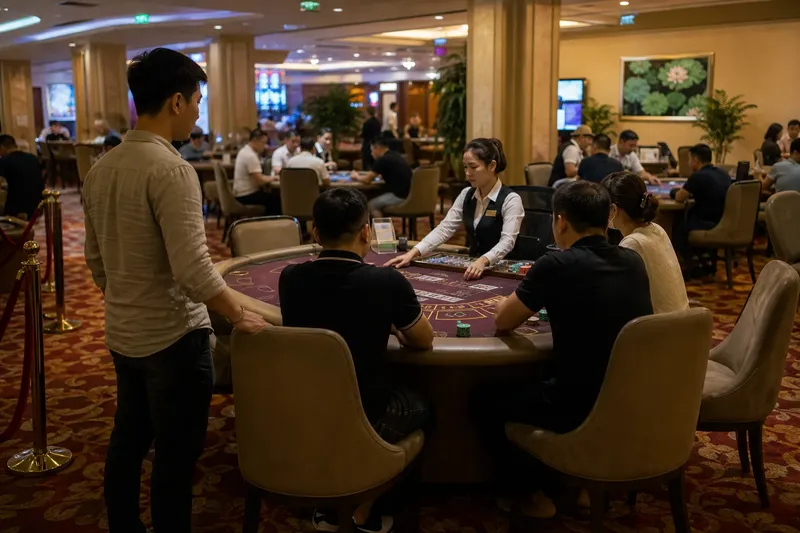
For a brisk, outward-facing mood, look for stories that emphasise movement through public rooms: arrivals, conversations, music and the changing pace of the evening. These settings make the casino feel like a social machine, with strangers briefly sharing space and attention. The reader’s pleasure comes partly from watching people adjust to one another.
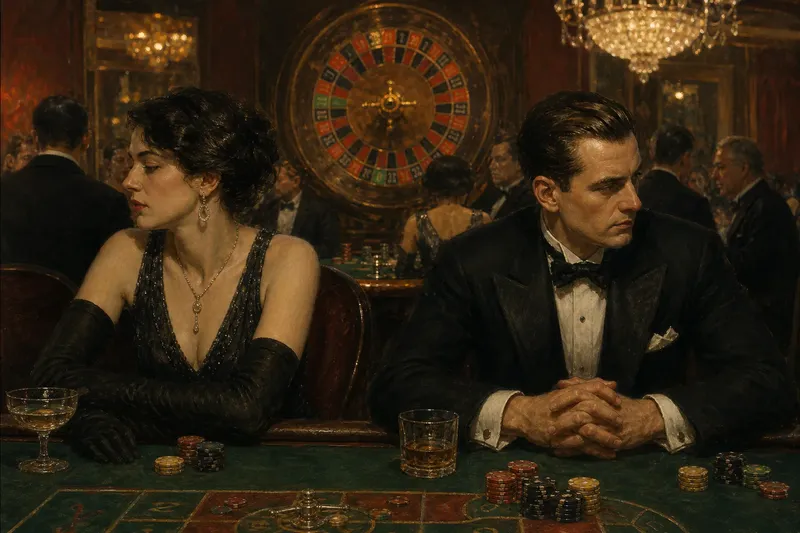
For a more inward mood, choose work that stays close to a small group or a single character. A table, a hotel room or the walk home can matter more than the gaming floor. Here, the casino may sharpen an existing conflict rather than create one. The question is not simply what happens during play, but what the characters believe the room permits them to reveal.
If you want a historical mood, seek writing that treats the casino as a product of its place and period. Ask what rules govern the room, who is admitted, who works there, and how the establishment relates to the surrounding town. Those details often say more than a velvet curtain or a stack of chips, both of which have been asked to do a great deal of literary work.
Use setting to distinguish one story from another
Settings can look similar at a glance and still produce very different kinds of stories. A grand hotel casino suggests a world in which guests can move between gambling, dining and lodging without stepping outside. Its rooms can support stories about status, privacy and the temporary ease of being far from home.
A local gaming room or neighbourhood venue carries a different weight. People may know the routines, the staff and the usual faces. Instead of an exotic visit, the setting can expose ordinary attachments: who belongs, who is passing through, and what a familiar room means to someone who returns to it.
Casino Biên Hòa can also be approached as a cultural subject rather than merely a decorative location. A reader comparing stories connected to a particular place should pay attention to how the writing handles local names, habits and social context. Does the setting feel inhabited, or does it function as a convenient backdrop for a generic tale of risk? That distinction matters in historical reading, where a place is not interchangeable with every other brightly lit room.
There is no need to demand an inventory of architectural details. A story can establish a convincing setting through a few carefully chosen elements: the route into the venue, the arrangement of public and private spaces, or the way staff and visitors address one another. What matters is whether those details help explain the characters’ choices.
Compare the casino’s job in the story
A useful winter reading list does not group books only by whether they contain gambling. It asks what the casino is doing. In one work, it may be a plot engine: a decision made at the table changes what happens next. In another, it may be a social lens, bringing people with different aims into a shared room.
Some stories use casino imagery to make chance visible. Cards, roulette wheels and chips give abstract uncertainty a shape the reader can recognise. Other works resist that symbolism and focus instead on labour, etiquette or the mundane systems that keep a venue running. The contrast is instructive: one book turns the casino into a metaphor, while another insists that it is also a workplace and a public institution.
When comparing two titles, notice who gets to describe the room. A visitor may see spectacle; a worker may see routines and responsibilities; a local observer may notice the venue’s place in the surrounding community. These perspectives need not cancel each other out. They simply make different parts of the setting available to the reader.
Also consider what happens outside the casino. A story that follows characters back to their homes or through the streets around the venue can show how the setting affects relationships beyond its doors. A tightly contained narrative may do the opposite, making the enclosed room feel like a temporary world with its own rules. Neither approach is automatically more convincing. The choice depends on whether you want a wider social picture or a concentrated encounter.
Build a small list around one winter evening
Say you have an unhurried evening and want to compare two kinds of casino story without turning reading into a filing exercise. You might choose one novel centred on a tense visit to a grand resort and one historical account concerned with a local venue’s place in its community. Start with the novel for atmosphere, then read the account for context. The expected result is a clearer sense of how a casino can serve both as a dramatic room and as part of a lived history.
Keep the list modest enough that each choice has a reason. A useful set might include:
- A room for spectacle: choose a story in which the venue’s public spaces shape the pace and social encounters.
- A close-quarters drama: pick a work that keeps attention on a small cast and their private motives.
- A place-based history: look for an account that connects a casino to local customs, work or community life.
- A story of the journey around the venue: choose a narrative that gives weight to streets, hotels or homes beyond the gaming floor.
- A work that questions the usual imagery: seek writing that treats chips, cards or bright décor as ordinary objects rather than automatic symbols of glamour.
For each book, jot down one sentence about its mood and one about the casino’s role. Keep the notes descriptive: “enclosed and uneasy; the venue brings old acquaintances together” is more useful than “good” or “not my thing”. The point is comparison, not a miniature review career.
It is not worth the effort to rank stories by how accurately they reproduce every game or room layout unless that detail is central to your interest. A close reading of setting can be valuable; a private audit of every prop is less likely to improve a winter evening.
Read the gaps as carefully as the bright details
Casino fiction often inherits familiar images: the solitary player, the dazzling room, the decisive turn of fortune. These can be effective, but a reader can ask what they leave out. Who cleans the room after the visitors depart? Who understands its routines? What assumptions about wealth, gender or belonging sit quietly behind the scene?
Those questions are especially useful when a story claims a historical setting. Rather than treating costumes and old-fashioned dialogue as proof of historical depth, look for the everyday arrangements that make the period legible. Consider how access to the venue is described, what kinds of work take place, and whether the surrounding community exists beyond a passing mention.
Silence can be informative, though it should not be mistaken for evidence by itself. If a story gives little attention to local life, that may reflect its narrow point of view or its chosen genre. A reader can note the limit without pretending to fill it from imagination. A second work with a different perspective may help broaden the picture.
Which casino story suits the mood you want?
What should I read for a tense, enclosed atmosphere?
Choose a story that confines most of its action to one venue or a small group of rooms. Limited space can make glances, pauses and shifts in conversation carry more weight than a catalogue of games.
What makes a casino story feel historically grounded?
Look for attention to place, access, work and the customs surrounding the venue, rather than relying only on period décor. A story feels more situated when its casino belongs to a community and not just to a stock image of glamour.
How can I compare casino fiction with historical writing?
Ask what each form treats as its main subject: character and plot, or the institution and its setting. Then compare how each handles details such as local routines, social roles and the boundaries between public and private life.
Can a casino story work if gambling is not the main theme?
Yes. The venue can bring characters together, expose differences in status or provide a distinctive setting for a story about work, family or belonging. In that case, notice how the casino shapes the action even when the games remain in the background.
Let the next choice answer the last one
After finishing a book, use a simple question to choose the next: what did this story make me curious about? If it made the casino feel like a sealed world, try a work that follows its characters into the surrounding streets. If its focus was local history, choose a more intimate narrative and notice what personal experience adds to the picture.
That approach keeps a winter reading list for casino stories from becoming a stack of near-identical scenes. It also makes room for more than one kind of attention: atmosphere, character, custom and history can all belong on the same shelf, provided each book gives you a different reason to stay by the fire.